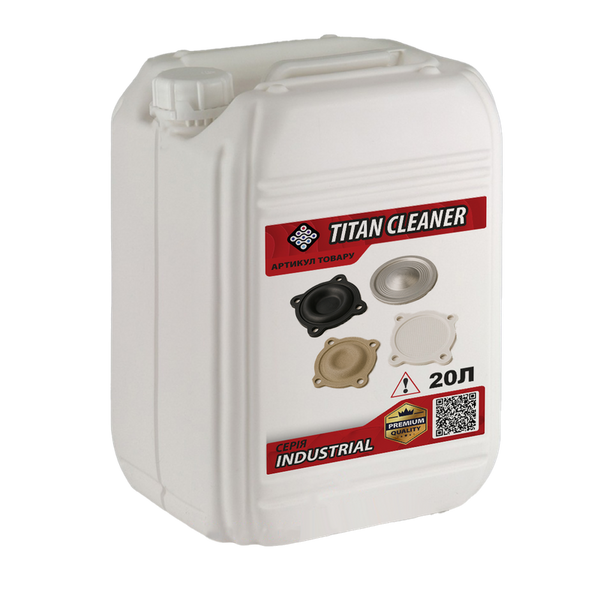
Titan Cleaner Industry TCN-1M27-A for membrane cleaning
🚨 Attention! Avoid contact of Titan Cleaner Industry TCN-1M27-A with aluminium surfaces and their alloys!
Titan Cleaner Industry is a concentrated specialized detergent designed for effective cleaning of parts and equipment using ultrasonic baths.
This product was created by experts of Titan Technics LLC, who have many years of experience in the production of ultrasonic washers (baths), which ensures its perfect compatibility and maximum efficiency when working with ultrasonic equipment.
Main characteristics of Titan Cleaner Industry TCN-1M27-A:
✅ Concentrate: Working concentration from 1:15 to 1:20 depending on the level of contamination.
✅ High efficiency: Removes colloidal contamination, sulphide deposits, salt crystals, organic deposits, oxide contamination, grease and oil contamination without traces.
✅ Versatility: Suitable for cleaning reverse osmosis (RO), nanofiltration (NF), ultrafiltration (UF), microfiltration (MF), gas separation membranes, polyamide (PA, PA‑TFC), polysulfone (PSU) and polyethersulfone (PES), fluoropolymers (PTFE, PVDF), cellulose‑based membranes, steel, PVC, polypropylene (PP), fluoroplastics (PTFE, PVDF), fibreglass (GRP, FRP).
✅ Cost‑efficiency: Optimal dilution ratios allow a significant reduction in cleaning costs.
✅ Technological compatibility: Ideal compatibility with ultrasonic equipment from Titan Technics LLC.
Types of contamination that Titan Cleaner can handle:
-
🧪 Colloidal contamination – effectively removes finely dispersed particles of organic and inorganic origin that settle on the surfaces of reverse osmosis, nanofiltration and ultrafiltration membranes, reducing the performance of water treatment systems.
-
🌑 Sulphide deposits – dissolves and removes deposits of iron, manganese and other metal sulphides that form on membrane surfaces when in contact with contaminated water, preventing channel blockage and reduced throughput.
-
🧂 Salt crystals – eliminates deposits of carbonates, sulphates, chlorides and other salts that crystallize in the pores and on the surfaces of membranes, causing increased hydraulic resistance and reduced filtration quality.
-
🌱 Organic deposits – effectively removes bio‑organic films, residues of humic substances, microbiological contamination and organic colloids formed as a result of long‑term membrane operation.
-
⚙️ Oxide contamination – eliminates oxide films and deposits of iron, aluminium, silicon and other metals that accumulate on membrane elements when in contact with natural water or as a result of equipment corrosion.
-
🛢️ Grease and oil contamination – dissolves and removes oil films, residues of technical oils and greases that get onto membranes during equipment operation or service maintenance.
-
Areas of application:
1️⃣ Cleaning reverse osmosis (RO) membranes – effective removal of colloidal contamination, sulphide deposits, salt crystals, organic deposits, oxide contamination, grease and oil contamination accumulating on membrane surfaces during filtration.
2️⃣ Cleaning nanofiltration (NF) membranes – elimination of oxide, organic and salt deposits that reduce the performance of water treatment systems, ensuring restoration of the membrane’s throughput.
3️⃣ Cleaning ultrafiltration (UF) membranes – removal of colloidal, microbiological and grease contamination that settles in the porous structure of membranes during filtration of industrial, pharmaceutical and biotechnological liquids.
4️⃣ Cleaning microfiltration (MF) membranes – effective elimination of grease, sulphide and organic deposits formed during mechanical filtration of highly dispersed suspensions, emulsions and microbiological contamination.
5️⃣ Cleaning gas separation membranes – removal of oxide and salt contamination that can reduce the efficiency of gas stream separation, preventing degradation of the membrane material.
6️⃣ Cleaning membranes made of polyamide (PA, PA‑TFC) – safe cleaning from colloidal and grease deposits that accumulate during operation in reverse osmosis and nanofiltration processes.
7️⃣ Cleaning membranes made of polysulfone (PSU) and polyethersulfone (PES) – elimination of organic and sulphide deposits that can impair the mechanical strength and hydrophilic properties of the membrane.
8️⃣ Cleaning fluoropolymer membranes (PTFE, PVDF) – removal of salt, colloidal and microbiological contamination that settles on membrane surfaces in processes of filtering aggressive media.
9️⃣ Cleaning membranes made of cellulose acetates (CA, CTA) – gentle cleaning from oxide, salt and grease contamination while preserving the natural hydrophilicity and mechanical integrity of membranes.
🔟 Cleaning polyacrylonitrile (PAN) membranes – effective elimination of organic, microbiological and grease deposits that can accumulate during treatment of wastewater and process water.
1️⃣1️⃣ Cleaning stainless steel membranes – removal of colloidal contamination, grease and salt crystals formed by contact with chemical reagents and process liquids.
1️⃣2️⃣ Cleaning PVC membranes – removal of grease and oxide deposits that can reduce the elasticity and filtration properties of the polymer base.
1️⃣3️⃣ Cleaning polypropylene (PP) membranes – elimination of sulphide and organic contamination accumulating during filtration of process and pharmaceutical media.
1️⃣4️⃣ Cleaning membranes made of fluoroplastics (PTFE, PVDF) – effective removal of oxide and grease contamination formed during filtration of corrosion‑active substances.
1️⃣5️⃣ Cleaning fibreglass (GRP, FRP) membranes – removal of grease, organic and salt deposits that impair the mechanical strength and durability of membrane systems.
Materials suitable for cleaning:
✔ Cleaning reverse osmosis (RO) membranes – effective removal of colloidal contamination, sulphide deposits, salt crystals, organic deposits, oxide contamination, grease and oil contamination accumulating on membrane surfaces during filtration.
✔ Cleaning nanofiltration (NF) membranes – elimination of oxide, organic and salt deposits that reduce the productivity of water treatment systems, ensuring restoration of the membrane’s throughput.
✔ Cleaning ultrafiltration (UF) membranes – removal of colloidal, microbiological and grease contamination that settles in the porous structure of membranes during filtration of industrial, pharmaceutical and biotechnological liquids.
✔ Cleaning microfiltration (MF) membranes – effective elimination of grease, sulphide and organic deposits formed during mechanical filtration of highly dispersed suspensions, emulsions and microbiological contamination.
✔ Cleaning gas separation membranes – removal of oxide and salt contamination that can reduce the efficiency of gas stream separation, preventing degradation of the membrane material.
✔ Cleaning membranes made of polyamide (PA, PA‑TFC) – safe cleaning from colloidal and grease deposits that accumulate during operation in reverse osmosis and nanofiltration processes.
✔ Cleaning membranes made of polysulfone (PSU) and polyethersulfone (PES) – elimination of organic and sulphide deposits that can impair the mechanical strength and hydrophilic properties of the membrane.
✔ Cleaning fluoropolymer membranes (PTFE, PVDF) – removal of salt, colloidal and microbiological contamination that settles on membrane surfaces in processes of filtering aggressive media.
✔ Cleaning membranes made of cellulose acetates (CA, CTA) – gentle cleaning from oxide, salt and grease contamination while preserving the natural hydrophilicity and mechanical integrity of membranes.
✔ Cleaning polyacrylonitrile (PAN) membranes – effective elimination of organic, microbiological and grease deposits that can accumulate during treatment of wastewater and process water.
✔ Cleaning stainless steel membranes – removal of colloidal contamination, grease and salt crystals formed by contact with chemical reagents and process liquids.
✔ Cleaning PVC membranes – removal of grease and oxide deposits that can reduce the elasticity and filtration properties of the polymer base.
✔ Cleaning polypropylene (PP) membranes – elimination of sulphide and organic contamination accumulating during filtration of process and pharmaceutical media.
✔ Cleaning membranes made of fluoroplastics (PTFE, PVDF) – effective removal of oxide and grease contamination formed during filtration of corrosion‑active substances.
✔ Cleaning fibreglass (GRP, FRP) membranes – removal of grease, organic and salt deposits that impair the mechanical strength and durability of membrane systems.
Materials not suitable for cleaning:
❌ Aluminium and its alloys (ZAM, silumin, anodized aluminium)
❌ Silver
Advantages of Titan Cleaner Industry TCN-1M27-A:
🌟 Expert development: A unique formula created by our industrial chemistry specialists based on many years of experience and analysis of customer needs.
🛠 Testing and quality: The product has been tested under industrial conditions. Our clients and partners have confirmed its high quality and effectiveness in practice.
🌿 Environmental friendliness: The surfactants comply with biodegradability requirements according to Regulation (EC) No. 648/2004.
🔬 Safety: Suitable for cleaning reverse osmosis (RO), nanofiltration (NF), ultrafiltration (UF), microfiltration (MF), gas separation membranes, polyamide (PA, PA‑TFC), polysulfone (PSU) and polyethersulfone (PES), fluoropolymers (PTFE, PVDF), cellulose‑based membranes, steel, PVC, polypropylene (PP), fluoroplastics (PTFE, PVDF), fibreglass (GRP, FRP).
⚡ High efficiency: Removes colloidal contamination, sulphide deposits, salt crystals, organic deposits, oxide contamination, grease and oil contamination without traces.
🔄 Long‑lasting effect: Ensures long‑term cleanliness without frequent replacement of the solution (from 2 weeks to 1 month).
💰 Cost‑efficiency: Concentrate with optimal dilution ratios, which reduces cleaning costs.
Technical specifications:
📌 Model article: 20TCN-1M27-A
📌 Brand: Titan Cleaner
📌 Series: Industry
📌 Processing time: 5–30 minutes
📌 Working concentration: 1:20
📌 Number of components: Single‑component
📌 Composition: Concentrate, alkaline compounds and surfactants
📌 pH: 11.0–13.0
📌 Packaging: Canister, PET container
📌 Shelf life: In closed condition – 2 years, in open condition – up to 1 year
📌 Application temperature: from +20°C to +60°C
Delivery time: 1–3 working days
Instructions for use:
1️⃣ Shake the product before use.
2️⃣ Dilute the concentrate in water (max. 1:20).
3️⃣ Fill the tank of the ultrasonic bath with the solution up to the mark or according to the manufacturer’s recommendations.
4️⃣ Switch on the device. For optimal results, use heating up to the recommended temperature.
5️⃣ Degas the solution (5–10 minutes or use the degassing function, if available).
6️⃣ Place the parts for cleaning. Run the bath for the recommended time.
7️⃣ Remove the cleaned parts and dry them.
Precautionary measures:
⚠ Use protective goggles, gloves and a respirator.
⚠ Avoid contact with eyes. In case of contact – rinse with plenty of water.
⚠ Follow the company’s occupational safety instructions.
🔄 Solution disposal: Discharge into the industrial sewer system in accordance with environmental regulations.
Packaging:
📦Titan Cleaner Industry TCN-1M27-A is available in packaging: 1 L, 5 L, 10 L, 20 L, 100 L, 200 L.
Titan Cleaner product range:
🟢 Home – concentration 1:1 – 1:3, suitable for household use.
📦 Packaging: 1 L, 2 L, 3 L, 5 L.
🟠 Business – concentration 1:7 – 1:10, suitable for production, service stations and enterprises.
📦 Packaging: 1 L, 2 L, 3 L, 5 L, 10 L.
🔴 Industry – concentration 1:15 – 1:20, for large industrial facilities.
📦 Packaging: 1 L, 5 L, 10 L, 20 L, 100 L, 200 L.
About the Titan Cleaner brand
Titan Technics LLC is a leading Ukrainian manufacturer of specialized cleaning agents Titan Cleaner. Our many years of experience in the development of ultrasonic equipment, research in the field of cleaning agents and close cooperation with customers have made it possible to create a line of high‑quality specialized cleaners with a unique formulation.
🚀 Order Titan Cleaner Industry today and see for yourself its quality, verified by experts and customers!