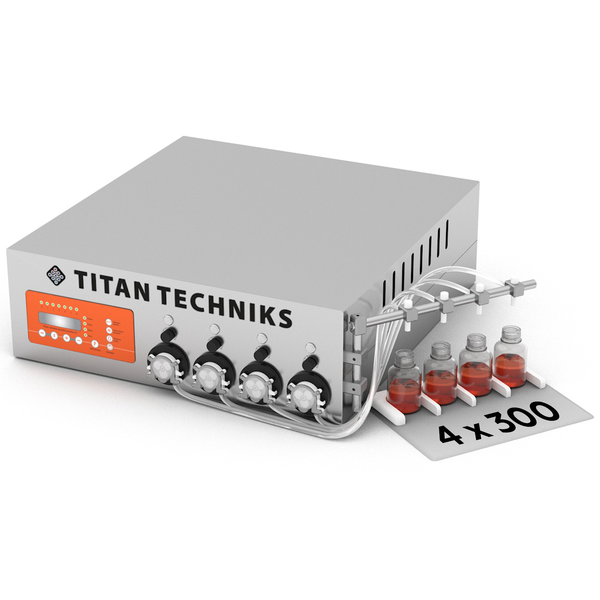
Electric peristaltic doser TTELPF-4/1,2-300/220/270,2-300/220/270 — liquid dosing for production tasks
How to choose the right electric dispenser with a peristaltic pump and avoid mistakes
[ AnchorBanner1 ]
Why the manufacturer matters
An electric dispenser with a peristaltic pump is not just filling equipment, but a unit that determines portion accuracy, line stability, and minimal product loss. Therefore, when choosing one, it is important to look not only at the price and dosing range, but also at the manufacturer, service, availability of spare parts, and real operating experience with the equipment.
What to pay attention to when choosing a peristaltic dispenser
Before purchasing, you need to determine which product will be dosed, into what type of container, with what accuracy, and at what productivity. It is important to take into account viscosity, flowability, chemical activity, the presence of impurities, and the requirements for materials in the product-contact path.
The main criterion is not just the dosing range itself, but stable repeatability of volume in real operation. That is what determines filling quality and predictable results.
[ AnchorVideo1 ]
Questions to ask the manufacturer before buying
Three key questions to ask before purchasing:
- How does the dispenser perform in real-world conditions?
- Are there successful cases with your product?
- Is service, repair, and spare parts available in Ukraine?
- Which pump type and materials are best suited for my product?
Ukrainian manufacturer of dispensers
Why “Titan Techniks”
“Titan Techniks” is a manufacturer that offers not just equipment from a catalog, but solutions precisely tailored to the specific tasks of your production.
The engineering team behind the Titan Dispenser brand has been developing electric dispensers with peristaltic pumps for many years specifically for Ukrainian market conditions. Our clients include food industry companies, chemical manufacturers, and cosmetics businesses, as well as laboratories and medical institutions.
The approach is built around the customer’s tasks:
- which product needs to be dosed
- what the volume per shift is
- what accuracy is required
- under what conditions the equipment will operate
This makes it possible to select a solution not by template, but for a specific task.
Classification of Titan Techniks dispensers
Titan Techniks offers several types of dosing equipment depending on the product properties and the specifics of the technological process. This approach makes it possible to choose the optimal solution for precise feeding of both liquid and viscous products and materials.
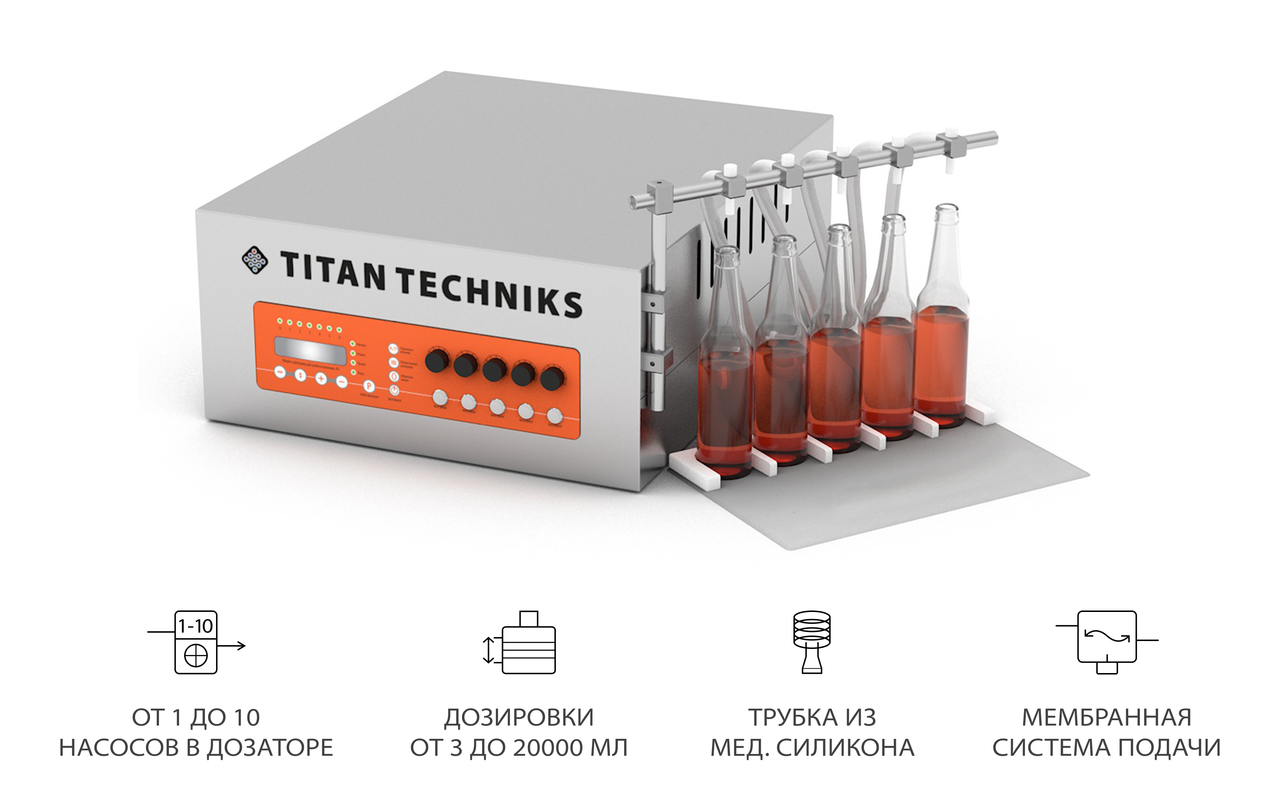
Diaphragm dispensers
Diaphragm dispensers are designed for precise and stable feeding of liquid media where sealing, reliability, and dosing repeatability are important. They work due to the reciprocating movement of a diaphragm, which creates vacuum and pressure in the working chamber, ensuring suction and delivery of the product.
This type of dispenser is well suited for food liquids, technical solutions, reagents, and various production processes. Diaphragm dispensers are especially effective where clear operation with flowable media and stable results are important.
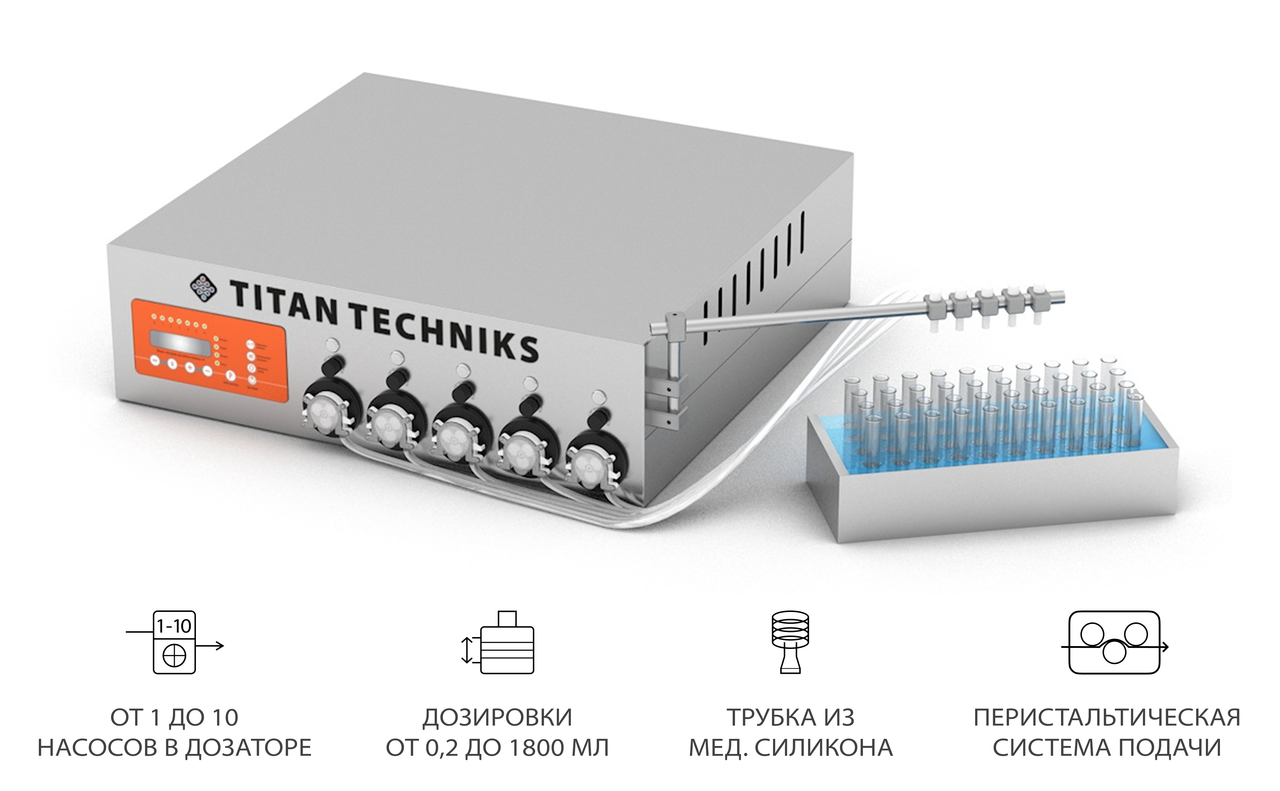
Peristaltic dispensers
Peristaltic dispensers are used for highly accurate dosing of liquid, sensitive, and chemically active products. Their operating principle is based on sequential compression of an elastic tube by rollers: the liquid moves inside the tube and does not come into contact with the internal components of the pump.
Because of this, the working medium is isolated from mechanical parts, which reduces contamination risk and simplifies sanitary cleaning. Peristaltic dispensers provide small doses with high repeatability, which is especially important when working with reagents, laboratory liquids, pharmaceutical and cosmetic mixtures.
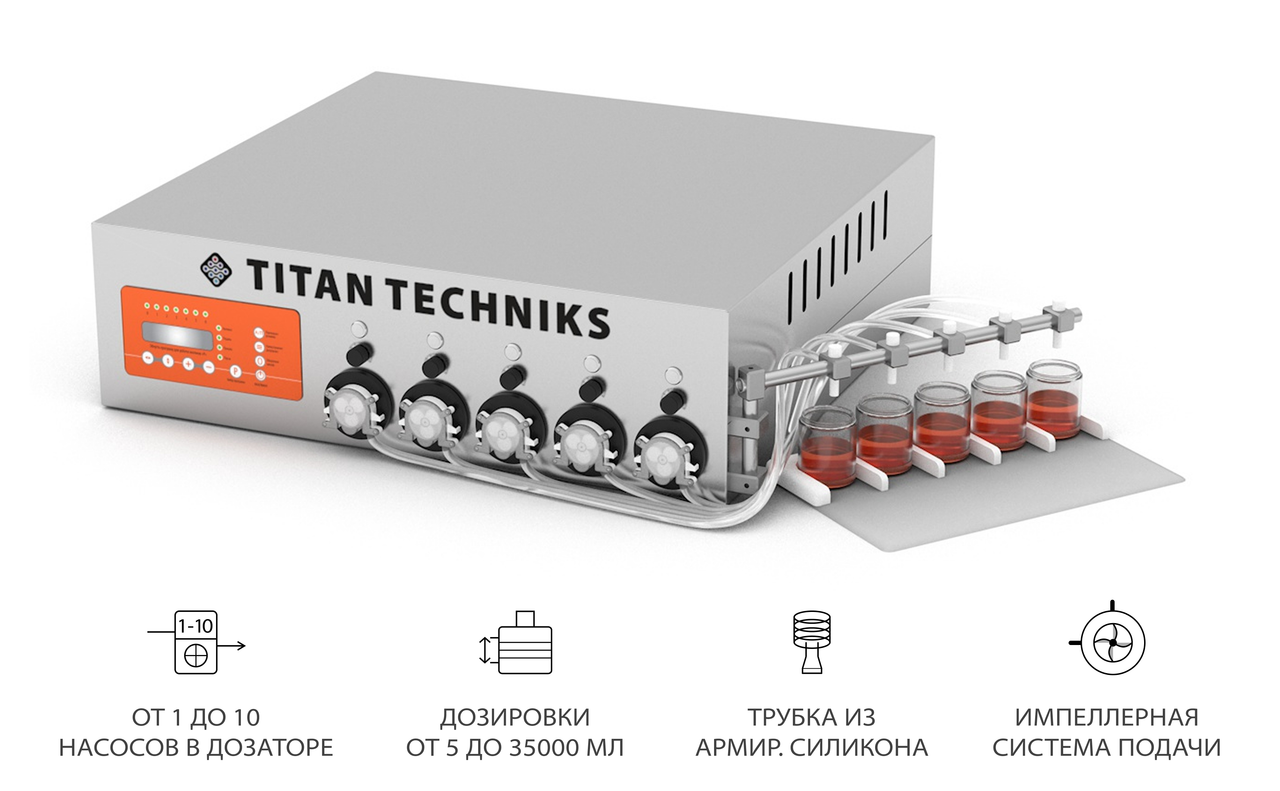
Impeller dispensers
Impeller dispensers are used for feeding viscous, soft, and non-uniform products. Their operation is based on a rotating impeller that moves the product inside the working chamber and ensures stable delivery.
Such dispensers are suitable for food products, sauces, cream-like compositions, pastes, cosmetic masses, and other medium-viscosity substances. Impeller solutions are best used where a combination of stable feeding, careful product handling, and the ability to work effectively with denser media is required.
How they differ
The main difference between these types of dispensers lies in the product-feeding principle and the nature of the media they work with.
1 Peristaltic — best suited for clean and delicate liquid dosing: sensitive, chemically active products and products requiring high cleanliness.
High precision in the small-dose range from 0.2 to 3 ml.
2 Diaphragm — for precise and stable feeding of flowable products in production processes: liquids, solutions, or reagents where accuracy and stability are important.
Usually 3–5 ml accuracy.
3 Impeller — for more viscous or softer materials: dense, cream-like products and pastes.
Average accuracy 10–20 ml.
Peristaltic pump dosing range
Select the required performance.
For example, a dispenser with a range from 0.2 to 60 ml per pump.
Min.
dose, ml
Maximum dose (ml)
How a peristaltic dispenser works
The operating principle of a peristaltic dispenser is based on the sequential compression of an elastic tube by rotating rollers. The liquid remains inside the tube, so as the rollers move, individual product volumes are formed and transported to the outlet.
The advantage of this solution is that the working medium is completely separated from the mechanical parts of the pump and only comes into contact with the inner surface of the tube. This is important for the accurate dosing of sensitive, sterile, or chemically active liquids, as well as for quick product changeover without complex system flushing.
Application areas of Titan Techniks peristaltic dispensers
[ AnchorVideo2 ]
Electric dispensers with a peristaltic pump are used where a stable, repeatable, and above all accurate result is required under daily load. They are in demand in several key areas.
- Food industry — syrups, oils, beverages, additives
- Technical liquids — oils, reagents, windshield fluids, solutions, liquid lubricants
- Laboratories — precise feeding of chemicals and reagents in medium volumes
- Cosmetics and household chemicals — liquid soap, concentrates, lotions, shampoos
How to choose a dispenser for production
Selection begins with analyzing the product, the required dosing volume, accuracy, and productivity. Then the pump type, materials, control method, and configuration for the container and operating mode are chosen.
When choosing, consider:
- Type of liquid
- Viscosity and flowability
- Dosing range
- Line productivity (doses per minute)
- Chemical resistance and sanitary requirements
Why a Ukrainian manufacturer matters
A local manufacturer means not only purchasing equipment, but also access to service, consultations, and spare parts without long waiting times. For business and production, these factors directly affect downtime, maintenance costs, and the predictability of line operation.
Titan Techniks offers dosing equipment with clear service support within the country and the ability to select a solution for a specific task. For production facilities, this is much more practical than buying equipment without a clear technical base and support from abroad.
Frequently asked questions from our customers
Which dispenser should I choose?
The choice of dispenser depends primarily on the product’s properties, the required accuracy, and the specifics of the process. For liquid, sensitive, or chemically active media, different types of dispensers may be used — peristaltic, diaphragm, impeller, or pneumatic — depending on the application conditions.
Are the dispensers suitable for food products?
Yes, if the materials in the product-contact path are correctly selected and meet food industry requirements.
Can a dispenser be selected for a specific volume?
Yes, solutions are available across a wide dosing range — from small volumes of 0.2 ml up to 1800 ml per peristaltic pump.
Can dispensers be used for technical liquids?
Yes, provided the tube materials are selected correctly with regard to the chemical activity of the medium.
Technical specifications of the TTELPF-4/1,2-300/220/270,2-300/220/270 dispenser
| Parameter | Value |
|---|
| Article number | TTELPF-4/1,2-300/220/270 |
| Manufacturer | Titan Techniks |
| Name | Electric doser with 4 pumps |
| Equipment type | Electric dosers |
| Product type | Liquid food |
| Equipment material | Stainless steel SS304 |
| Number of pumps | 4 |
| Pump type | Peristaltic |
| Doser type | Food |
| Minimum dose (ml) | 1.2 |
| Maximum dose (ml) | 300 |
| Dosing accuracy | Enhanced |
| Aggressive liquid | No |
| Hazardous vapors | No |
| Flammable liquid | No |
| Impurities | No |
| Tube material | Medical silicone |
| Pump material | Plastic |
| Control power (W) | 130 |
| Pump power (W) | 35 |
| Total power (W) | 165 |
| Operating voltage (V) | 220 |
| Warranty (months) | 6 |
| Production start date | 2023 |
| Series | Titan Dispenser |
| Service life (months) | 36 |
| Multilingual support | No |
| Repairability | Normal |